
Dr. Panda Restaurant
Dr. PandaEducational
3.9168.00 Reviews
- Version
- 26.3.41
- Installs
- 100.00K
- Age Rating
- Everyone
Screenshots
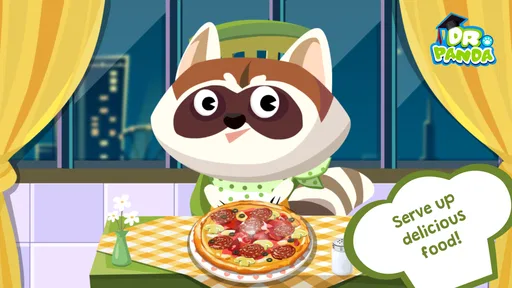
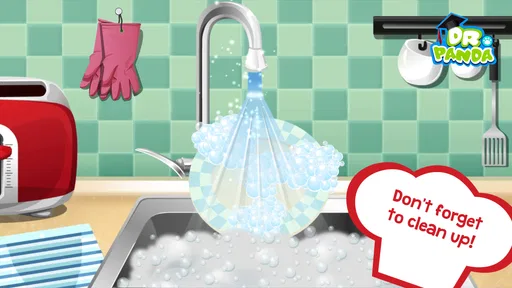
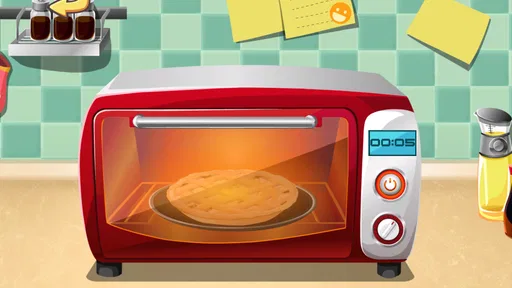

Our Review of Dr. Panda Restaurant
 Analysis by Appyee
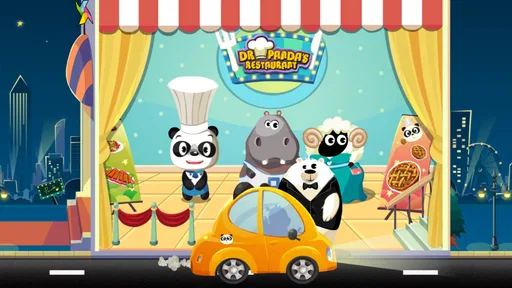
Dr. Panda Restaurant is the kind of educational game I would open with a young child when I want something playful, calm, and easy to understand. I step into a restaurant run for animal guests, prepare food, and watch the setting turn ordinary cooking actions into a small story. It is not trying to be a demanding restaurant simulator or a fast arcade challenge. Its appeal comes from giving children a friendly place to explore at their own pace.
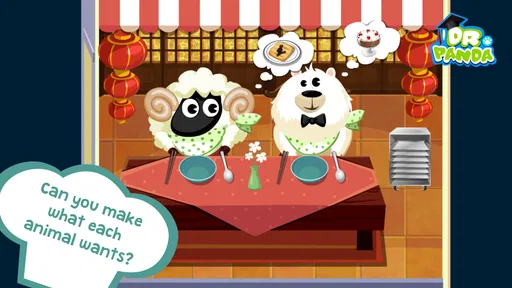
My first impression was that the game understands its audience well. The bright animal characters, simple restaurant setting, and direct interactions make it approachable almost immediately. I never felt that I needed to study instructions before handing it to a child. The basic idea is clear: welcome the animal customers and make something delicious for them. That simplicity is a strength, although it also means older children may reach the limits of the experience sooner than they would with a deeper cooking game.
A gentle restaurant world built for exploration
The game comes from Dr. Panda, a developer known for child-focused experiences, and that identity is visible in the way the restaurant is presented. The setting feels like a safe play space rather than a realistic commercial kitchen. The animals give the room personality, while the food preparation creates a reason to touch, drag, choose, and observe. I found that the setting does a lot of the teaching without turning the experience into a lesson screen.
What works especially well is the way the visual language communicates cause and effect. A child can see ingredients, interact with the kitchen, and understand that the next step is connected to what is already happening. The animal guests also make the result feel social. Preparing food is not just an isolated action; it is part of looking after someone in the restaurant. That small emotional link gives the activity more meaning than a collection of disconnected taps.
The art direction is colorful without feeling aggressively busy. This matters when a child is still learning where to look on a screen. The restaurant provides a recognizable frame, while the characters act as visual anchors. I can imagine a child returning to the same scene because the animals make it feel familiar, even when the actual activity is simple.
There is also a useful distinction between this game and a conventional cooking tutorial. It does not present food preparation as a sequence of strict instructions that must be completed perfectly. Instead, the child gets room to experiment with the available interactions. That makes it better for imaginative play and less suitable for someone specifically looking to learn real recipes, kitchen safety, or accurate cooking technique.
Why the visual style supports the learning goal
The design encourages observation. Children can notice what an animal wants, decide what to do next, and see the response. Those are modest skills, but they are valuable in early play: following a situation, making a choice, and connecting an action with an outcome. I would not describe the game as a formal educational course, yet it creates a gentle practice space for attention and decision-making.
A useful tip is to avoid taking over the screen too quickly. When I play with a child, I get more value by asking what the guest might need rather than immediately showing the answer. The restaurant works best as a conversation starter. Questions such as “What should we prepare first?” or “How do you think the animal will react?” turn a short play session into shared problem-solving without making it feel like homework.
The visual simplicity can also help children who become frustrated by complicated interfaces. There are fewer layers to decode than in many management games, and the restaurant theme is understandable even to a child who cannot read much yet. On the other hand, children who enjoy collecting, upgrading, competing, or completing long chains of objectives may find the gentle presentation too limited.
Sound, pacing, and the mood of play
The restaurant’s mood depends on more than its drawings. The overall presentation is relaxed, and the pacing leaves room for the child to decide what to do instead of pushing a countdown or a constant stream of demands. I appreciate that choice because it keeps the experience closer to pretend play than to a test of speed.
That slower rhythm is particularly useful in an everyday setting. Imagine a child waiting while a parent finishes preparing dinner. A short session can offer a focused activity without requiring the child to memorize rules or manage a complicated menu. The restaurant theme also fits the moment naturally: the child can play at preparing food while the adult is nearby, then talk about what they made.
The atmosphere is coherent because the setting, characters, and interactions all point in the same direction. Nothing about the restaurant suggests pressure or competition, so the unhurried pace feels intentional rather than empty. I would choose this over a noisy time-management game when the goal is to settle a child after school or provide a quiet activity before bedtime.
There is a trade-off here. A calm pace can become repetitive if a child wants constant novelty. Without the urgency found in cooking challenges, the experience relies on the child’s curiosity and the adult’s willingness to play along. I think that is acceptable for a younger audience, but it is important to set expectations: this is not a high-energy game designed to keep a player chasing scores.
Using the rhythm instead of fighting it
I get the best results by keeping sessions open-ended. Rather than asking a child to play until every possible interaction is exhausted, I let them prepare a meal, react to the animal guest, and stop when the pretend story feels complete. That approach prevents the simple mechanics from becoming tiring.
Another practical idea is to use the game as a prompt for real-world conversation. After a session, I might ask which food the child would serve at a real restaurant, how they would welcome a guest, or what makes a meal feel special. These questions extend the game’s social theme without pretending that it teaches professional cooking.
For children who are sensitive to overstimulation, the unhurried structure is one of the strongest reasons to consider it. For children who need a clear reward ladder, competitive goals, or increasingly difficult stages, the same structure may feel too quiet. The right choice depends less on age alone and more on the kind of play the child already enjoys.
How the mechanics fit the restaurant fantasy
The central mechanics are easy to understand because they match the fantasy. I am not solving abstract puzzles and then being told that the result represents cooking; I am interacting with a restaurant environment where preparing food makes sense. That connection gives the actions a natural purpose.
In my experience, this is where the game is more successful than many generic educational activities. The child is practicing choices and sequences while believing they are caring for animal customers. The learning value is embedded in play instead of announced with labels. That makes it easier to keep the child engaged, especially when they are not interested in conventional educational apps.
The game is also a good fit for shared play between an adult and a child. One person can suggest ideas while the other controls the action, and then roles can switch. This creates a useful middle ground: the child has agency, but the adult can help with navigation or turn the activity into a story. I would not rely on it as a completely hands-off babysitter, because its greatest strengths appear when the child is actively exploring or discussing what is happening.
At the same time, the mechanics are intentionally light. Players looking for a realistic cooking system, detailed resource management, or a demanding progression path should choose a different type of game. A more advanced restaurant simulator may offer menus, budgets, upgrades, and customer timing, but it will also bring more rules and pressure. Dr. Panda Restaurant is better when the priority is accessibility and imaginative interaction.
Who will enjoy it, and who may outgrow it
I would recommend it most confidently to younger children who enjoy animals, pretend restaurants, and touch-based discovery. It is also suitable for families wanting an activity that can be explained quickly. The content rating is Everyone, which matches the friendly tone and makes it an easy candidate for a shared family device.
The game may be less satisfying for older children who already expect complex objectives. If a child asks why there are no tougher recipes, timed orders, restaurant improvements, or score-chasing goals, that is a sign that the experience has become too basic for them. In that situation, a more structured cooking or management game would be a better fit, even if it is less peaceful.
It is worth considering the purchase style as well. The listed price is $3.99, so this is a paid game rather than something I would approach as an endless free-to-play session. I see that as a positive for families who prefer a straightforward purchase, but the value depends on whether the child enjoys open-ended repetition. If the child needs a new objective every few minutes, the price may feel harder to justify than it would for a child who likes returning to familiar pretend-play worlds.
The game has an average rating of 3.9 from around 1.8 thousand ratings, with 168 written reviews. Those figures suggest a generally positive but not universal response, which feels consistent with the experience itself: the game has a clear audience, and its simplicity will be either its main attraction or its main limitation.
Practical details before installing
On Android, the game requires version 6.0 or later. Its current version is 26.3.41, and it has passed the 100 thousand install mark. I would still check that the device is comfortable for a child to hold and that the screen is large enough for the restaurant interactions to remain easy to see.
The game was released on August 30, 2012, but its older origin does not automatically make it a poor choice. In this case, the straightforward concept is part of the appeal. I would judge it by whether the child enjoys the restaurant play rather than expecting the visual complexity or depth of a recent management title.
One small but important workflow tip is to begin by letting the child explore without correcting every action. The restaurant is more rewarding when the child feels ownership over the process. If an adult turns every interaction into a prescribed sequence, the game can lose the playful quality that makes its simple mechanics work.
My final view of the restaurant atmosphere
Dr. Panda Restaurant succeeds because its art direction, setting, sound, and pacing all support the same idea: cooking as friendly pretend play. I like that it does not force a competitive rhythm onto a child who may simply want to explore. The animal guests give the actions warmth, and the restaurant provides enough context for basic choices to feel purposeful.
My strongest recommendation is for families seeking a calm, accessible game that can be played alone for short periods or enjoyed together with an adult. It is especially appealing when the goal is to encourage imagination, conversation, and simple cause-and-effect thinking. The experience feels most complete when someone is willing to talk with the child about the guests and the food rather than treating the game as a passive distraction.
I would skip it for a player who wants a serious cooking challenge, a long progression system, or constant new goals. The gentle pacing and limited complexity are not flaws in isolation, but they do narrow the audience. Compared with fast restaurant alternatives, this game gives up pressure and depth in exchange for a softer mood and a more approachable interface.
After spending time with it, I see the game as a focused little restaurant world rather than a full cooking simulator. That focus is why it works. If your child enjoys making up stories around animals and food, the relaxed design is likely to feel welcoming rather than shallow. For that specific audience, Dr. Panda Restaurant is an easygoing educational game with a coherent atmosphere and a clear sense of purpose.
Verdict
Strengths of Dr. Panda Restaurant
- Simple controls make it easy for young children to play independently.
- Bright animations and friendly characters create an inviting atmosphere.
- Open-ended cooking encourages creativity without strict time limits.
- Suitable for short play sessions and casual offline entertainment.
- Interactive ingredients help children explore basic food preparation steps.
Limitations of Dr. Panda Restaurant
- Gameplay can feel repetitive once all kitchen interactions are discovered.
- Limited challenge may not keep older children interested for long.
- Some content may require an in-app purchase to unlock.
- The app offers little educational guidance beyond basic kitchen play.
- Performance may vary on older devices with limited storage or memory.
Other Releases by Dr. Panda
View All
Dr. Panda Train
Educational3.7

Dr. Panda Restaurant 2
Educational4.1

Dr. Panda Bath Time
Educational3.8

Dr. Panda Racers
Racing3.9
Similar Picks in This Category
View All
Little Panda Policeman
BabyBus4.0

Monster Trucks Game for Kids 2
Raz Games4.1

Little Panda's Chinese Recipes
BabyBus4.4

Little Panda's Restaurant
BabyBus4.4

Little Panda's Ice Cream Games
BabyBus4.3

Baby Panda Care
BabyBus3.8
Frequently Asked Questions
What is Dr. Panda Restaurant, and what can children do in the game?
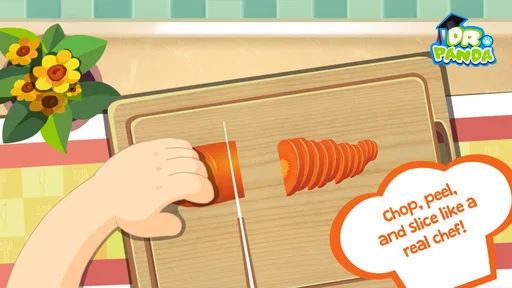
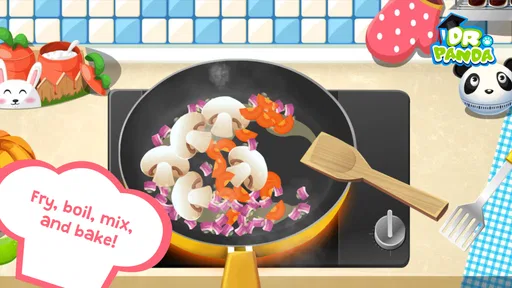
Dr. Panda Restaurant is a child-friendly cooking and restaurant simulation game where players prepare meals, serve customers, and explore a colorful kitchen. Children can choose ingredients, slice, mix, cook, and present food in a playful environment. The game focuses on open-ended experimentation rather than strict objectives, allowing young players to create their own stories while learning basic concepts about food and kitchen routines.
Is Dr. Panda Restaurant suitable for young children?
The game is designed primarily for young children, especially preschool and early elementary-age players. Its controls are simple, the visuals are bright, and the activities do not require advanced reading or fast reactions. Parents should still check the current age recommendation on the Google Play Store or App Store, since suitability can vary depending on a child’s development and the version available in their region.
Does Dr. Panda Restaurant require an internet connection to play?
After installation, Dr. Panda Restaurant can generally be played offline, which is useful for travel or situations where Wi-Fi and mobile data are unavailable. Some platform features, such as downloading the app, restoring purchases, receiving updates, or accessing store-related services, may require an internet connection. It is best to launch the game once while online before giving the device to a child for offline play.
Does Dr. Panda Restaurant include advertisements or in-app purchases?
The exact business model can depend on the edition, platform, and region, so parents should review the current store listing before downloading. Many Dr. Panda titles are designed as paid or child-focused experiences with limited advertising, but optional purchases or separate content may still be available. To prevent accidental spending, use parental controls and require authentication for purchases on the device.
Is Dr. Panda Restaurant safe for children and does it collect personal information?
Dr. Panda Restaurant is presented as a child-oriented game with a simple, non-violent setting and no need for players to communicate with strangers. However, no app should be treated as completely risk-free. Parents should read the privacy information, check permissions, and review any links or purchase options before handing over the device. Downloading only from the official App Store or Google Play also reduces security risks.
Play our best games!


